Well, hello there dear readers! Long time no speak. I hope all is well with you in your world and that you had a fantastic holiday season. But with the passing of a new year comes the ever looming return to work and with it the return to reality.
Speaking of reality, last year was something of a fairy tale in my household. What with the arrival of baby Brandon and the return from military life to 'civdiv' aka civilian status. It'll be a hard-pushed year to top the last but we'll see how we go.
Look for a return to form on my part, in particular on the reviewing front. I'm currently re-reading/finishing Steven Erickson's titanic Malayan series so stay posted for that, and I'll try squeeze in a few more interviews and author guest posts.
With all that said and done all that's left to do is to wish you all a very happy new year!
Tuesday, 31 December 2013

Sunday, 18 August 2013
David Gemmell Morningstar Award Guest Post: John Gwynne, Author of 'Malice'.
John Gwynne doesn't just write heroic-fantasy, he lives it, too. On the 'Hero's Requirement' list, he's ticked all the box.
Son of a warrior - check. His father was in the Royal Air Force.
Seen the world - check. Born in Singapore, waited tables in Canada, lectured in Brighton University, and now restoring vintage furniture in East Sussex (heck, even heroes need to pay the bills).
A Heart of Gold - Full time father of four, including his disabled daughter, Harriet.
Fair maiden - check. Though I'm sure she's now damsel in distress!
A Mighty Steed - well, he's got three dogs, each much not smaller than a horse!
Legendary Weapon - A WHOPPING great big axe!
So, when John put his pen to paper, it was only natural that an epic saga be born from the ink. A tale of heroes and heroines, nightmarish creatures and black magic. A world in which a black sun rises on the horizon of tomorrow, and with it comes a war to end all wars...
But even in a world where angels and demons vie for power on the battlefield, even the lowliest of mortal beings can change the tide. John brings his human nature to fantasy, reminding us that even everyday heroes can make a difference.
John Gwynne is one of the shortlist nominees for the David Gemmell Morningstar Award 2013. If you'd like to vote for him - or any of the other authors - please visit the site and show your appreciation for your favourite books, and the great men and women who write them.

Son of a warrior - check. His father was in the Royal Air Force.
Seen the world - check. Born in Singapore, waited tables in Canada, lectured in Brighton University, and now restoring vintage furniture in East Sussex (heck, even heroes need to pay the bills).
A Heart of Gold - Full time father of four, including his disabled daughter, Harriet.
Fair maiden - check. Though I'm sure she's now damsel in distress!
A Mighty Steed - well, he's got three dogs, each much not smaller than a horse!
Legendary Weapon - A WHOPPING great big axe!
So, when John put his pen to paper, it was only natural that an epic saga be born from the ink. A tale of heroes and heroines, nightmarish creatures and black magic. A world in which a black sun rises on the horizon of tomorrow, and with it comes a war to end all wars...
But even in a world where angels and demons vie for power on the battlefield, even the lowliest of mortal beings can change the tide. John brings his human nature to fantasy, reminding us that even everyday heroes can make a difference.
John Gwynne is one of the shortlist nominees for the David Gemmell Morningstar Award 2013. If you'd like to vote for him - or any of the other authors - please visit the site and show your appreciation for your favourite books, and the great men and women who write them.
Firstly I’d like to
say a huge thank-you to David Emrys for inviting me back to his blog.
I love David Gemmell’s
books. My first encounter was with ‘Legend,’ way back in the mists of my
teenage years. Back when there was hair on my head. I remember buying ‘Legend’
from my local Waterstones, heading home and settling in. I finished it in the
small hours of the next morning, feeling both exhausted and elated. Ever since
then David Gemmell has been responsible for a distinct lack of sleep in my
life.
Much to my regret I
never met him, although I did discover that we lived in the same area. I know
this because of something that he wrote in the acknowledgements of one of his
books, ‘Sword in the Storm’ - which also happens to be one of my top reads
ever, I just LOVE IT - I’ll quote in full the acknowledgement.
“My thanks to
my editors Liza Reeves and Broo Doherty, and also to Alan Fisher, Val Gemmell,
Mary Sanderson, Bill Woodford, Tony Fenelon, and Jan Dunlop for feeding the
imagination. And
to the staff at Deep Pan Pizza, the Crumbles, Eastbourne, for their warmth,
their friendliness, and their Regular Americano with extra bacon and pepperoni.”
How cool is that. If I
had not already been a complete fan of David Gemmell’s then that
acknowledgement would have finished the deal. What a cool bloke.
I live in Eastbourne
and have done on and off since I was 15. The Crumbles was Eastbourne’s first
out-of-town retail park. Originally it consisted of a cinema, a furniture shop,
a supermarket, and Deep Pan Pizza. It was the height of sophistication to go to
Deep Pan first, and then on to the cinema. These days the Crumbles is much
bigger. Unfortunately Deep Pan Pizza is gone, the same building taken over by
Frankie and Benny’s (another favourite of mine - my wedding reception was held
there as we had a 1940’s/50’s theme; my wife and I are total vintage nuts).
Anyway, I’ve shown
that acknowledgement from ‘Sword in the Storm’ to a lot of people, usually
saying something like ‘I’ve been there/eaten/ordered that pizza,’and considered
it a claim to fame. Things have gone a little mad this last year with the
release of my debut novel, Malice, and now I have a new claim to fame.
This is a photo of
Malice on a bookshelf in my local Waterstones - the same bookshop that I bought
my first Gemmell book, Legend, from - next to a couple of the Big Man’s books.
It feels pretty
surreal to even see Malice in a bookshop at all - I can still vividly remember it being
scattered notes on my desk, and I feel exceptionally fortunate to see it in
print. There have been lots of great, memorable moments along the path to
publication and beyond - my agent John Jarrold taking me on was a big ‘am I
dreaming’ moment, as was the phone call from him telling me of Julie Crisp’s
pre-emptive offer from Tor UK.
Seeing Malice on the
same shelf as David Gemmell is my latest ‘pinch-me-because-I-must-be-dreaming’
moment. Now, I don’t know about you, but in my book that is cool.
- John Gwynne, 2013.
Saturday, 17 August 2013
David Gemmell Morningstar Award Guest Post: Miles Cameron, Author of The Red Knight.
Miles Cameron, 'The Red Knight' as his enemies know him, battled his way through the first round of the David Gemmell Morningstar Awards nominations. Last Sunday, he emerged from the longlist arena, spoiling for round two.
You see, the thing about Miles is that he knows a thing or two about putting up a good fight. A military veteran, having served in combat and support roles, he's bloodied noses and wiped them, too. This experience, combined with a passion for fantasy, gives Miles a killer edge in the writing-wrestlemania. Front line warfare? He's been there done that. Commanded troops and called the difficult decisions? No problem!
Magic...?
...well, he's been as close as it gets in reality, pitting his talents against the dark arts of electronic warfare.
(If you haven't already done so, be sure to visit the site and have your say in the nominations! Oh, and while you're there vote in the Legend and Ravenheart categories, too.)
Today, Miles Cameron is here to talk about his debut novel 'The Red Knight', and how real life shaped his fantasy world.
I just returned to Canada (I'm a Colonial) from three weeks spent in the UK. I've been many times, as an officer in the Navy pulling into Portsmouth, as a tourist flying into London, and for years I've been fishing for sea trout and salmon in Scotland. But this trip was spend being a tourist in the North of England--the Lakes and the Border. I've been before, but this time I really had the time to get to know the Dales.
Why should you care?
One of the most frequently asked set of questions about The Red Knight is about locations. In the UK, readers assume the book is set in an alternate England, and in North America readers seem to feel it is set in the Great North Woods of our own continent, so I thought I'd use David's pulpit here to mention some locations that I love, because, of course, the answer is--it's set in both. It is Fantasy, after all!
So, for example, while the Adnacrags--the mountains to the north fo the main action--are the Adirondack Mountains of my childhood, the dales and villages surrounding the Fortress of Lissen Carrack where the main action takes place are the villages of Hawkshead and Kentmere in the Lake district. The dragon lives on the high fells above the Lakes--those barren, beautiful, stark towers of grass and rock--and the Inn of Dorling might be recognized by Glaswegians as their own Drover's Inn at the head of Loch Lommond, with a strong hint of the inn at the top of Kirkstone pass, locally known as 'The Struggle' in Westmoreland. Harndon--the capital of Alba--is mostly Medieval London, although there's some Paris there and a little New York, and Master Pye, the armourer, works out of a shop that I saw (it belongs to a real life Armourer, Mark Vickers) in Boston, in the UK.
I am an inveterate camper and hunter and fisherman, and the outdoors always appeals to me, but the Lakes--like the Adirondacks--have a magical aura to them--a darkness under the canopies of the trees contrasting with the light of the open ground and lakes--the special colours of the sky when rain is immanent--that brings home to me the visceral meaning of the Wild. Too often, in fantasy (and all other forms of adventure fiction) the struggle of the protagonist is against monsters and evil (or good)--and yet, anyone with a passing familiarity with the outdoors must realize that to take a horse, a sword, and armour across any distance in the misty 'past' that is fantasy would have been a major effort. Even in goretex and wellies, the Fells offer real challenge. And so do the Adirondacks, once described by a veteran climber as 'the only Mountain Swamp in the world'. The Wild--as I see it--is more than Wyverns and Dragons and Irks and Boggles. It is rain and mud and cold and heat and midges and mountains and fells and tracks and rock and rivers and becks--and beauty.
It is no fantasy.
You can go there still.
-Miles Cameron, 2013.
Sunday, 11 August 2013
And the Nominees are....Announcement of the Shortlist Candidates for the David Gemmell Morningstar Award 2013!
To many a fantasy fan, myself included, the David Gemmell Legend Awards is like the Oscars...but better.
Why?
1) Because us - you, me and I - we get to vote, to have our say. I could launch into an Obama-style rhetoric here, but I'm not here to flood the polling stations to change the WORLD. But if you do vote for someone in the Gemmell awards, you will change THEIR WORLD.
2) Because, arguably, authors are unsung heroes in their own rights. Sure you might not see Mark Lawrence slinging abuse at paparazzi (though I'm sure Jorg would do that for him), or Helen Lowe arm-in-arm with Robert Patterson on the red carpet, earning her the envy of teenage girls the world-over, but authors do deserve a nod for their achievements.
This evening, at the Nineworlds Geekfest event, the shortlist candidates for all categories in the David Gemmell Awards were announced. The longlists have been whittled down to the publicly-voted few. Both the Legend and Morningstar categories have 5 hopefuls, whilst the Ravenheart has 6.
On 'Written With a Sword' I've been following the Morningstar category, because to me at least, it's the who's who in rising fantasy authors...the next big guns as it were.
So, it gives me great pleasure to name the short list candidates for the 2013 Morningstar award:

Why?
1) Because us - you, me and I - we get to vote, to have our say. I could launch into an Obama-style rhetoric here, but I'm not here to flood the polling stations to change the WORLD. But if you do vote for someone in the Gemmell awards, you will change THEIR WORLD.
2) Because, arguably, authors are unsung heroes in their own rights. Sure you might not see Mark Lawrence slinging abuse at paparazzi (though I'm sure Jorg would do that for him), or Helen Lowe arm-in-arm with Robert Patterson on the red carpet, earning her the envy of teenage girls the world-over, but authors do deserve a nod for their achievements.
This evening, at the Nineworlds Geekfest event, the shortlist candidates for all categories in the David Gemmell Awards were announced. The longlists have been whittled down to the publicly-voted few. Both the Legend and Morningstar categories have 5 hopefuls, whilst the Ravenheart has 6.
On 'Written With a Sword' I've been following the Morningstar category, because to me at least, it's the who's who in rising fantasy authors...the next big guns as it were.
So, it gives me great pleasure to name the short list candidates for the 2013 Morningstar award:
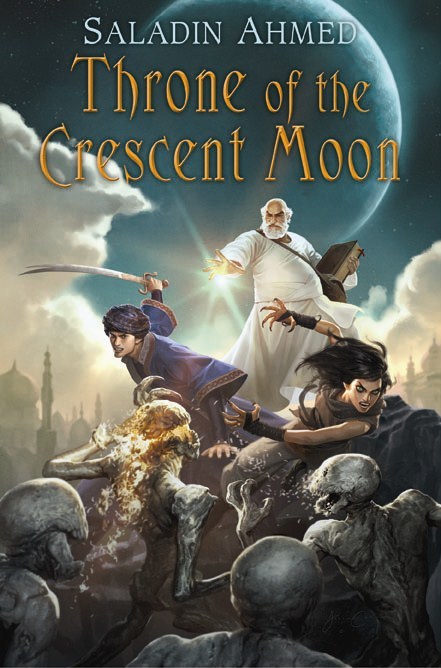
Saladin Ahmed - Throne of the Crescent Moon.
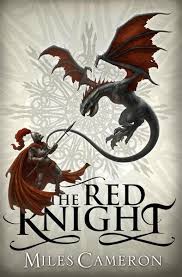
Miles Cameron - The Red Knight.
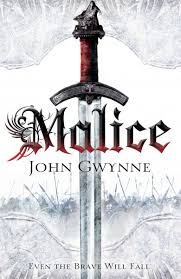
John Gwynne - Malice.
Aidan Harte - Irenicon.
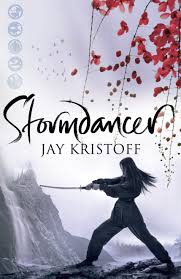
Jay Kristoff - Stormdancer.
In previous years (and this information was taken from the DGLA site) longlist voting closed in Easter, followed by shortlist voting up until a predesignated date. The awards were then announced and presented at the DGLA event.
This year, the award ceremony will be at the World Fantasy Convention on 31st October.
Be sure to vote for your favourite authors (and books!) in all of the categories when the second round goes live!
Friday, 9 August 2013
David Gemmell Morningstar Award Guest Post: Gaie Sebold, Author of Babylon Steel.
Continuing with the theme of long list nominees for the David Gemmell Morningstar award, Gaie Sebold has very kindly written a guest post discussing her debut and its titular character Babylon Steel. The post itself, I think, is as current as Edward Snowden's void stamp on his travel insurance, why? Because the interwebz side of the fantasy community over the recent months has been rife with calls of 'female characters shouldn't just be depicted as hussies looking to drop their clothes at the first sign of a square-jawed hero' (or perhaps a loveable dwarf we all know so well) or, more importantly, the pointed finger of misconception that female writers aren't held as equal to male writers...

Talk about kicking the vipers nest, eh?
I, for one, do not believe in that. Heck, I'd go so far as to say that I think it's ludicrous that someone would/wouldn't pick-up a book based on the author's gender.
But, all that is for another time, another post, another mass internet debate.
Today, Gaie has centre stage - and yes, Babylon Steel might be a damsel with an appetite for the physical side of life (heck, who doesn't like sex and brawling?...in some senses they're very much alike), but I assure you, you won't find her taking centre stage in a chain bikini...
Take it away!
You know those lines in the Airplane films about ‘Looks like I chose the wrong day to…”
Well, unbeknownst to me, just as a great deal of furore was
in the process of bubbling up about everything from depictions of women in
fantasy and what sort of armour any sane woman would wear on the
battlefield (hint - not the sort that
showcases your boobs, unless you want a broken sternum) to Fake Geek Girls,
Girl Cooties in SF and whether the day of the kick-ass heroine was over, I was
writing swordfighting fantasy with a female protagonist. The eponymous heroine, Babylon Steel, is not
only good with a sword, but good in bed and proud of it. She runs a brothel, she’s its chief asset and
she regards whoring as a craft, not a last resort.
Of course, I was actually doing it on purpose. Not courting controversy, that is, but
writing about a character who embodied certain things that interest me. I do wonder about the timing, but then, my
subconscious has an entire life of its own and only occasionally lets me in on
it.
Babylon is a strong woman who is physically capable of
taking care of herself. Now, it
frustrates me that this should even still be an issue. I know lots of women like this. Every martial arts class I’ve ever taken or
witnessed contains women – sometimes, they’ve been the instructors. True, not all female protagonists have to be
kick-ass. On the other hand, neither do
all male ones, but strangely, I don’t hear nearly such a fuss about all these
kick-ass men and how everyone’s getting really tired of that trope. (I was recently asked at a panel whether
kick-ass female characters really are
empowering for women. My response was to
ask whether James Bond is empowering for men.
At which point the panel ended, sadly – I’d still be interested in the
answer).
Maybe not everyone of
any gender wants to be kick-ass. Maybe not everyone – of any gender - should have to be. But with the constant chronic threats to
women’s physical autonomy that we all live with, I can’t see any reason why
anyone, except perhaps people who’d rather women stayed nice soft targets,
would object to physically capable female role models.
I don’t, of course, believe that all problems can or should
be solved with violent physical response – but I don’t believe the capacity
should be confined to one gender. After
all, it never has been. Female warriors
have existed throughout history; and women who weren’t classed as warriors have,
like men, always had to fight to protect themselves, their families, or their
land.
Then, of course, there’s the sex/brothel thing. I tend to get asked about how much research I
did on that…it’s usually asked in good humour, thankfully. But it does amuse me. No-one asks about how I researched the
swordplay (I took classes in Fioré school sword fighting, among other
things). I know several crime writers
and, somehow, no-one asks them whether they’ve committed murder in order to get
the splatter patterns right!
But as a culture we are obsessed with sex, and as soon as it’s
mentioned, that’s what people focus on. As
a society we despise people who have sex for a living, while constantly
worrying about whether we’re not getting enough or someone else is getting too
much. Babylon thinks sex is important, and she enjoys it. But for her it’s not this huge complicated problem. I wanted to write about her partly
as a way of examining our own society’s attitudes to sex. And not everyone she encounters has the same relaxed
attitude to sex or prostitution. I am, after all, using fantasy to write about
reality – and the reality, especially for many sex workers, is often extremely grim
and very dangerous.
Babylon Steel isn’t
just about sex and fighting. It’s also
about power, and responsibility, and what happens when people have too much of
the first without enough of the second. And
about loyalty and friendship and good food and rude jokes. It’s set in the rather peculiar city of
Scalentine, which is surrounded by several portals leading to other planes with
their own various societies, their own particular obsessions and attitudes,
which I hope to examine in future books.
Some people won’t pick it up because the subject matter puts
them off. Some people may pick it up
because they think it’s going to be nothing but blades and bonking. They may be
disappointed, but on the other hand, they may get more than they expected. That,
of course, is my evil plan.
Tuesday, 6 August 2013
David Gemmell Morningstar Award Guest Post: Aidan Harte, Author of Irenicon.
First in a series of guest posts from the longlist nominees of this year's 'David Gemmell Morningstar Award', Aidan Harte talks politics, the ideal world, and his historical-fantasy 'Irenicon'.
What is Christ died before ever reaching adulthood?
What if Herod had killed the infant Christ?
Would Christianity be any different?
Would the world be any different?
POLITICAL FANTASY
In less liberal regimes, allegory is a useful veil to
protect the author from the authorities (sometimes that veil is judged too
thin: only the protection of being dead could induce Bulgakov to publish The Master and the Margarita.) More
often, transposing of thorny scenarios to other worlds is a means of clarifying
questions that are muddy in our own. Since Jonathan Swift took Gulliver on his grand
tour of Lilliput, authors have recognised Fantasy as an ideal form to
interrogate political ideas.
One cannot talk about Fantasy in this vein without
reference to its cool jetpack-wearing brother, Science Fiction. Political
engagement is something SF has never shied from – indeed, it is widely
considered one of its main functions. However diverting a new SF, if it has
nothing to say about this world, it
is a disappointment, if not a failure. This is not to say a SF can do without
drama if the political ideas are sufficiently interesting – disguised
manifestos are a bore; trudge through some 1950s SF if you doubt me – only that
an especially vivid type of political debate is something that attracts many
readers to the genre.
I believe Fantasy has the same possibilities and
obligations. Its record however is less consistent and I blame that
pipe-smoking rogue: Tolkien, J'accuse! Although there is certainly a political
element to LOTR, its roots and aspirations are in the world of myth. A more
important and representative figure for those who champion the political model
of Fantasy is Ursula K. Le Guin. It was because she had a foot in each genre
that she escaped the withering effect of the professor’s vast shadow. You may locate
her masterpieces, The Left Hand of
Darkness and The Earth Sea Quartet
in different shelves of your bookshelf but they are kindred creatures. “Speculative feminist Fiction” sounds too dreary
for words – but fans of Le Guin will tell you she is bracing, funny and
intellectually nimble. The wisdom as well as passion of her stories, forces the
reader to engage. Unlike the SF of the previous generation, these two books are
not moored in their era. Yes, they are informed by the tumult of the 60s and the
shadow of Vietnam is there but they have that sure mark of the classic: they are
fresh today.
All this is by way of saying that Le Guin’s light
touch was an exemplar when I began to write my Wave Trilogy and tease out the
politics of my world, an alternate medieval Italy called Etruria by the natives.
The 14th century was a period when finding the best governmental
model was not an academic debate but a matter of life and death. From Milan to
Naples, Monarchies, communes, republics, and plutocracies vied with each other,
and the only ones that profited were mercenaries called condotteri who
cheerfully fought for whoever paid the most.
An ideal world? Far from it, but it was at least not a
world in thrall to that modern Grail: consensus. Consensus, it’s nearly as ugly
as that other word polluting contemporary political discourse: Harmonisation. Those
who use it imply that opponents are tone-deaf. Devilishly hard to pit yourself
against harmony. “I’m for dissonance!’ is a stinker of a rallying cry. But the
opposite of harmony, when you’re talking about countries, currencies, laws, tax
or interest rates is not dissonance – it is choice. With our fixation on
consensus, comfort and consumerism, choice is the vital ingredient of the good
life we lack. Not that you’d know it; our leaders our desperate to remind us
that we’ve never had it so good. When you’re hooked by a status quo, it’s
impossible to know it. Since the late 17th century, we – the West –
have been in thrall to the nation state, but what are the alternatives?
Federalism is a concept with great antecedents.
Germany today is still a type of federation, albeit a paradoxical version with
a strong central government; as for its neighbour, Dante would have found the
modern state of Italy absurd, spiritually and linguistically impoverished. But
the most famous example of a land of loosely allied city states is Ancient
Greece. Its unity was a brief thing, forged by the Persian invasion and
sundered by the Peloponnesian War. O, but what a summer! The hothouse
competition of drastically different models in one land with a common language
created civilizations that still cast their shadow. To compare the Athens of
Pericles with the sclerotic banality of contemporary Greece is entirely unfair;
every modern country would fail that test.
The Warring States, the title of book II of the Wave Trilogy, is a
phrase purloined from Chinese history. This was the turbulent period when China
was a plurality of kingdoms, filled with shifting alliances, sustained warfare,
and general misery. The competition ended when the First Emperor ruthlessly
forged a unified country with one central authority. It’s a dreadful
generalisation (but essentially true) to say that there followed, with a few
interruptions, a long period of stasis in which dynasties slumbered on the
throne surrounded by scheming bureaucracy. China’s bureaucrats never paid the
lip service to diversity that ours are wont to but, East or West, allowing real
choice is never in the interests of the political class. Many historians and
economists posit nevertheless that choice is, in the long-term, beneficial. They
argue that it was Europe’s diversity of states, their political experimentation
and the free market of competing ideas that led to the continent eclipsing of
the rest of the world from the 1500s onwards. If true, then it is not only
ironic that harmony is our goal when Europe is declining, it is tragic.
Infuriating as the paternalists who would deny us
choice are, they have one point, and it’s a doozy: federations, whatever their
merits, tend to be unstable, prone to factionalism and hostile takeovers. Big
fish do not readily give equal voting rights to little fish when there are
other options. The nation state, and its big brother Empire, offer, at least in
the medium term, stability. Stability isn’t the stuff of great oratory, but
then it doesn’t need to be. Stability makes its own argument. When you’re half
way into a mortgage, stability is positively sexy.
My story is an exploration of this perennial struggle.
It has, I hope, interesting ideas, but I don’t pretend that it provides any prescriptions
or predictions. It’s become a commonplace to suggest that the nation state is fading
away painlessly thanks to, like, Twitter n’ junk. Reports of its demise are
certainly exaggerated and if past form is any indicator, it won’t go down
without a fight. Which model will win? Neither. In this war, all victories are
partial and temporary. As the classic of Chinese literature, The Romance of Three Kingdoms begins:
“Anything
long united must fall apart; anything long apart must unite.”
Aidan Harte, August 2013.
Irenicon is available now.
Monday, 5 August 2013
The Rising Stars of Fantasy - David Gemmell Morningstar Award Nominees.

Imagine an arena...
No, not that one - not the Colosseum. That's a little out of the budget I had in mind.
Listen to the roar of the crowd...
No, not that one either - you really think I'm talking about the back room in the local ye-olde-tavern where the drunkards take potshots at each other?
Smell the sweat - hear the thud of flesh - taste the...
No, no, NO! I'm not talkinga bout Christian Grey's 'Red Room'!
Ok, this is getting out of hand now. Before we smear the remaining six wonders of the world (wait, the tavern isn't in that list?!?) or infringe on any other intellectual properties (we could always take a swing at Hogwarts if you'd like?) let's get down to it.
Voting for the long list of the David Gemmell MORNINGSTAR AWARD closed last week. The shortlist will be announced at the Nine Worlds GeekFest event on Sunday 11th August...THAT'S THIS WEEK!
Ok, ok, ok - I'm excited, I'll admit it.
And, I know I'm getting ahead of myself, but the awards themselves will take place on Thursday 31st October, as part of the World Fantasy Convention in Brighton.
The Morningstar Award is a very special category, because not only does it crown a well deserving author for her/his debut novel, but it also marks the rising stars in Fantasy for years to come.
This year the longlist nominees (and their respective titles) were:
As a huge supporter of new talent within the fantasy genre, I've invited each of the long list nominees to post a guest blog on 'Written With a Sword'. These guys and gals are the ones to watch, and how better to get acquainted with them than this?
Stay tuned for their pieces' - and stay tuned for announcement of the short list next week!
Subscribe to:
Posts (Atom)