Tuesday, 19 March 2013

Guest Post: Fantasy Author, Kyra Dune

Today I'm going to feature another Indie fantasy author Kyra Dune. She's already got a string of novels out on the digital bookshelves, but I thought I'd invite her along to talk about her newest release 'Flight of Dragons', a Young Adult Dystopian fantasy.


Micayta’s world has long been gripped in the thrall of an endless winter that grows worse with the passing of time. Life is a constant struggle. Then catastrophe strikes the small town in which she lives, thrusting Micayta and her brother Pytaki alone into the snow laden countryside. To keep herself and her brother alive will take all the strength that she has.

Then a mysterious stranger appears to complicate matters. Tech has an amazing story to tell, but is any of it true? Old wounds and betrayals make Micayta slow to trust, but without Tech she and her brotherwill never make it across the countryside alive. Through bandits, wolves, and snowstorms, the three struggle their way to the city of Phadra. But the real danger lies within the city walls, where Micayta becomes a player in a deadly game with a dark-eyed mage. Nothing is what it seems.

As the truth unravels, Micayta finds herself drawn into a struggle much bigger than she ever dreamed. Choices must be made and sides taken. But the question of who to trust is one not easily answered. Micayta will have to open her heart and find a way to let someone else in, or the flames that destroyed her home will consume the world.

Kyra Dune was born in Oklahoma, but spent most of her life travelling with her family. She is the author of several novels, including: ‘Flight of Dragons’, ‘Elfblood’, and ‘Shadow Born’. As a little girl, her favorite books were those that told of ordinary children who traveled to magical worlds. She’s yet to find her own magic wardrobe or rabbit hole, but she hasn’t given up the search. You never know what might be waiting over the next rainbow. 

Sunday, 17 March 2013

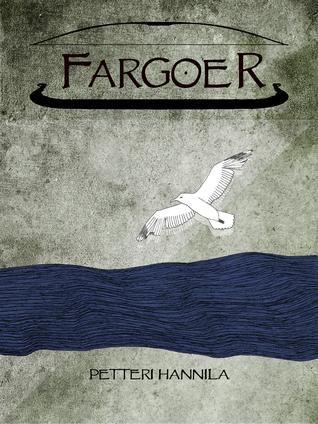
Guest Post: Fantasy Author, Petteri Hannila

Apologies for the delay in service dear readers! I've had myself a little time away 'in the sun', but normal viewing will resume.....now? I'm still unpacking/dusting off from the trip, so with little time to spin a yarn of my own, I'd like to take this opportunity to introduce you to another author friend of mine, Petteri Hannila from across the pond in Finland (check me out getting all global/European and the like). His acclaimed stories, known as 'Fargoer', have gained a lot of attention here on the interwebz so I thought it was about time we learn a little more about the 'man behind the pen'.


I'm a writer from Central Finland, a software designer by day and a dad/husband/dreamer/martial artist by night.
It all began when I was eight years old. I found out that there were books of Tarzan, my childhood hero. My mother started to read them to me, but censored them - all of you who have read them know why. Annoyed by this, I started to read them on my own. Dreams and legends have followed me from those days, as companions on my voyage through life.
Only few years after that I thought about writing for the first time, but for a long time I pushed it away from my mind for supposedly more important things. Finally I understood that none of my stories would ever see the daylight until I got started, and I did. From the days of Tarzan, exciting adventures and fantasy stories set in the past and the future have been my interest. Thus, the natural choice for me was to start writing science fiction and fantasy. Some years ago the idea of Fargoer made its way into my consciousness, and it hasn't loosened its grip of me since.
New Fargoer stories and paths of Vierra's future circle in my thoughts until I write them out. There are so many stories to tell until the end, and that end is painted clearly on my mind.
I believe Fargoer can bring a breath of fresh air to the fantasy genre, featuring a powerful historical background (the genre is historical fantasy) and storyline combined with a strong female protagonist. The book was released in Finland earlier this year, and the feedback has been promising and encouraging. Here in Finland, me and my brother Miika are pioneers in self-publishing, since the field is completely dominated by traditional publishing houses and large companies. Besides hoping to offer people an enjoyable and immersive read, we hope that Fargoer would clear the way for other independent, quality releases from Finland. We also believe Fargoer would be an exotic read for many, since our country is so far away and quite unknown to most of the world.


Fargoer is available from:

Amazon
B&N


Thursday, 7 March 2013

Interview: Fantasy Author, John Gwynne

John Gwynne - like a BOSS!
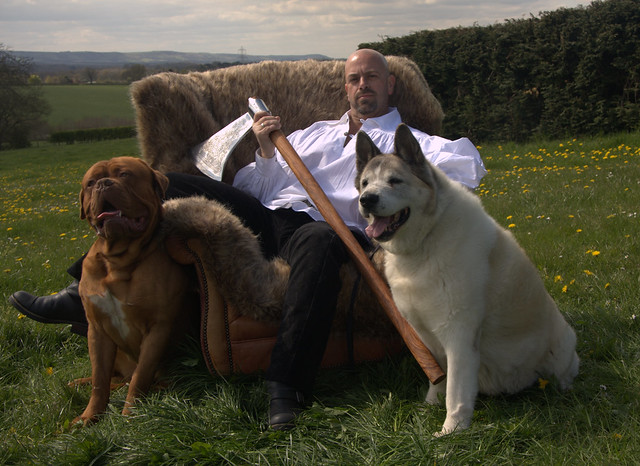
If you're reading this, you're likely wondering: 'who's that hard-as-nails bloke with the two tanks/dogs and the big axe?'

Two words, ladies and gentlemen = John Gwynne. 

And he means business.

So, this is part 3 on my feature week with John Gwynne. If you've missed his guest post or the review of his fantasy debut 'Malice', check back over the recent posts and get yourself up to date! Today, as a fond farewell and a thank you for joining me on my blog, I'll be featuring an interview with John. I hope you've all enjoyed having him here as much as I have. He's a real gent, and if you haven't picked up a copy of 'Malice' yet then make sure you do! You certainly won't be disappointed.


For the benefit of those who might not know you prior to this interview, please introduce and tell us a little about yourself.

Hello. My name is John Gwynne and I am 44 years old. I was born in Singapore while my dad was stationed there in the RAF. Up until he retired that meant a lot of traveling around, generally a move every three years or so.

I live with my wife and four wonderful (and demanding) children in East Sussex. Also three dogs, two of which will chew anything that stands still. I have had many strange and wonderful jobs, including packing soap in a soap factory, waitering in a french restaurant in Canada, playing double bass in a rock n roll band, and teaching at Brighton University.


I stepped out of university work due to my daughter’s disability, so now I split my time caring for her and working from home - I work with my wife rejuvenating vintage furniture, which means fixing, lifting, carrying, painting and generally doing what my wife tells me to do...


I have also had my debut novel, ‘Malice,’ published recently, by Tor UK.


If you had to sum up 'Malice' in 50 or less words, what would you say?

To sum it up: Angels, demons, giant-clans, betrayal, wyrms, wolven, draigs, giant bears, wars, feuds, magic, coming of age, blood-sucking bats, flesh-eating ants, betrayal, an ambitious prince, a young warrior looking to make his mark, an outlaw with a conscience, politics, betrayal, shield-walls. And did I mention betrayal?

What inspired you to write 'Malice'? And how are your story ideas born?

‘Malice’ began as a hobby, a bit of ‘me’ time in a busy life. Once I started putting pen to paper, choosing what to write was easy - fantasy has been in my blood for as far back as I can remember. Much of my inspiration has come from world mythologies and those that have gone before - in other words I’ve pillaged from greater people - Milton, Blake, Machiavelli, Homer, Dante, many others. Also I think of ‘Malice’ as an homage to writers like Tolkien and Gemmell.

What was the hardest part of writing 'Malice'? And if you had to do it all over again, would you change anything in it?

One of the hardest parts was chopping characters and scenes during the edit. With your objective hat on you can see how the book works better without said scene or character, perhaps for pacing issues, but letting go was still difficult. Working with a great editor that I trust helped with that.

Did you learn anything from writing your book and what was it?
The whole book was one long learning curve for me, and I’m still learning.

Can you tell us anything about your next book?

Book 2 is a continuation of the tale begun in ‘Malice.’ Hopefully it contains all the elements that readers have enjoyed from ‘Malice,’ - a character-driven tale told within an epic backdrop of battles, intrigue, betrayal (of course), love, loyalty and friendship.

Do you normally read other books in the same genre of your own?

Absolutely! Whenever possible, which usually means whenever I visit the toilet. Actually these days I rarely read anything outside of my favourite genres - fantasy and historical. I used to try and mix it up, but time is such a rare commodity, so nowadays I’d just rather read from the genres that I love.

Who is your favourite author and what is it that really strikes you about their work?

That’s almost impossible to answer, the closest I can get is favourites. J.R.R.Tolkien would be hovering around the top of that list, and David Gemmell. Also George R. R. Martin, Bernard Cornwell, J. V. Jones, Neil Gaiman; Miles Cameron has become a recent favourite. There really are so many.

Any advice for other writers/indie authors out there? And what’s the best advice that you have been given when it comes to writing?

I don’t really feel qualified to be dishing out writing advice, I am still in shock that my book is actually sitting on shelves, in real bookshops! I suppose if I was pressed I’d have to say write what you want to read. What stirs some passion in you. Hopefully some of that passion will leak onto the page, and you never know, it may become contagious.

I'd just like to take a moment to thank John for being a fantastic sport and agreeing to participate in this week's feature.

UPCOMING APPEARANCE
John Gwynne will be attending the 'Fantasy In The Court' Event at Goldsboro Books, London, on the 28th March between 1800 and 2100. Free up the evening on your calendar and go along to meet a promising new fantasy author!

Wednesday, 6 March 2013

Review: Malice


Malice
Malice by John Gwynne

My rating: 5 of 5 stars


The Good: Fully fleshed-out world, engaging characters, solid plot.

The Bad: A little on the longer side so it’s not a single-sit on a Sunday afternoon, and I felt a lull in pace towards the middle.

The Ugly Truth: Malice is a hugely impressive debut. The characters are very much real, you believe in and feel for them. The world and setting has a very ‘lived in’ feel, as if the author has taken time and care to craft his realm with an artisan’s touch.

For Those That Like: David Gemmell, J.R.R. Tolkien, myths and legends, Michael J Sullivan, novels with a young adult feel to them, stories about the ‘coming of age’ and ‘a greater purpose’.

A war in heaven.

A war in the Banished Lands.

A war of the Gods.

An ancient prophecy has come to pass. Giants have returned to the Banished Lands, their ruins bleeding into the earth. The borders of the Kings of men are no longer safe, as foul creatures stalk the shadows. Bats that can drain every drop of blood from a body, and white Wyrms that can swallow an armoured knight. Asroth’s minions will flock to the banner of the Black Sun, and a second God war will begin.

High King Aquilius calls a council of kings, proposing an alliance in the darkest of times. Their hope lies in defeating the Black Sun, but also in seeking Elyon’s champion, the Bright Star. The prophecy divides the royal alliance, and the kingdoms return to their own affairs. Prince Nathair, promising warchief and first born of King Aquilius, rides for his father’s cause, forging new oaths between the regions of the Banished Lands. Nathair’s results are impressive, but his methods and allies are questionable…

Veradis, for one, follows Nathair without question. Though the Prince’s campgain takes them to the far corners of the Banished Lands, Veradis believes that the search for the Bright Sun might be closer to home.

Home is the last place that Kastell wants to see. Now a grown man, his childhood squabble with his cousin, Jael, has taken a turn for the worse. They no longer play at war, but live the bloody reality. And Jael isn’t just Kastell’s cousin, they’re both nephews of King Romar.

Corban wants nothing more than to fight for his King. The only problem is that warriors are brave, and he is a self-proclaimed coward. In a time when heroes are needed, will Corban rise to the occasion and claim his destiny, or cower and hide? For he is not just the Blacksmith’ son…

…And it’s always darkest before the dawn. The Black Sun and Bright Star are on the horizon.


John Gwynne’s ‘Malice’ is his debut novel, and the opening to a brand new epic fantasy series ‘The Faithful and the Fallen’. I have discussed the story at length with the author (who has been more than accommodating to a writer/wannabe author) and I can’t help but agree with his definition of ‘Malice’ as an ‘enjoyable adventure with a tip of the hat to Gemmell and Tolkien, but add a more modern character flavour’. ‘Malice’ is a legend-forged saga of heroes and hellions, true friends and traitors, and a war to end the worlds of both mortals and immortals.

‘Malice’ follows the coming-to-pass of an ancient prophecy. The Black Sun will wash over the Banished Lands with his hordes, annihilating the realms of men. Man’s only chance against the darkness is the Bright Sun, a promised warrior of Elyon. A true tale of good vs evil, told through the lives of ordinary people, with very special destinies.

‘Malice’ has an eager cast of fantasy hopefuls, each with their differences and their similarities, but all relatable thanks to their very ‘human’ lives. When I say ‘human’ I mean that they’re real people, believable and with dreams and nightmares of their own. Corban is the recognisable hero-to-be from a downtrodden background, who we see come of age throughout the story. Kastell is another underdog, though he comes with a bark AND a bite enough to see him become a giant slayer. Veradis is a warrior foremost, his unwavering loyalty to Prince Nathair seeing him hold the line against hordes of enemies – man, giant, and draig alike. There are most characters aside from these – someone for each and every reader to relate to.

Gwynne revamps fantasy tropes for his debut. Sure, we’ve all read stories of good vs evil, wars between the gods, doomsayer prophecies, heroes and villains, characters with great destinies…but this is different. ‘Malice’ embraces the old favourites and breaths a new lease of life into them. Gwynne’s goal to embody a little bit of Gemmell and Tolkien with a modern mix-up has definitely paid off! I have to say, ‘Malice’ embodies a ‘suitable for all ages’ GRRM appeal. Whilst reading the story, you can imagine Gwynne positioning his characters as if they were on a chess board. And when he goes in for the check mate, boy does he move fast. The finale was literally on-the-edge-of-your-seat, nail-biting excitement. Whilst some points of the book read more methodically, as if you’re reading them to get to the next chapter, you can see why they’re important later on. Without spoiling anything, when everything begins to kick off, you’ll be dragged along for the ride!

John Gwynne is a newbie to the fantasy writer world, but with ‘Malice’ he’s well earned his place amongst the ranks of the great.


View all my reviews

Tuesday, 5 March 2013

Guest Post: Fantasy Author, John Gwynne.

I have a pantheon of authors that I follow. In some senses its a 'who's who' of the literary world. Think of it as Clash of the Titans meets the fantasy bestseller list. Michael J Sullivan, Mark Lawrence, Ben Galley, Helen Lowe, Anne McCaffrey, Peter V Brett, Joe Abercrombie, Brent Weeks, Tamora Pierce...the list goes on! (Though I have to say, Abercrombie for Hades anyone?)

Amidst the big names, the little guys shoulder their way in. Russell Kirkpatrick, Toby Neighbors, Joseph Lallo, Michael Stark.

And then there's the REALLY big names. Glen Cook, Steven Erikson, Robin Hobb, Ursula Le Guin, Big Papa Tolkien, and of course, the father of British heroic-fantasy David Gemmell!

So, when a newbie comes along to my version of Mt. Olympus and throws his weight around, it's something of a big deal to me. I followed a book last year right up to its publication date, and begged my fiancée to get it for me for christmas. Thankfully, I made Santa's nice list (bribes do work!) and come December 25th I got my hands on a copy of 'Malice' by John Gwynne. It's a hefty tome, but a handsome one at that. At first I was dubious whether a debut author could pull off such a large story, and deliver what it said on the tin...as in EPIC fantasy.

I was more than pleasantly surprised to find that John Gwynne could in fact deliver - and go beyond his call of duty to spin a yarn that had me hooked to the end! It's safe to say that Gwynne has joined the ranks of my pantheon, up their in the clouds with greats, looking down upon us mere mortals. But, as he is still relatively new to the 'scene' I thought it was about time I made some introductions for you all!

This week, I'll be hosting a review and guest post with the esteemed author himself, but I thought it best that he welcomes you all personally. I'm very humbled to have him here, and I hope that you all enjoy reading a little bit about him and his stories.

So, without further ado, I present none other than John Gwynne!


Malice and Me.


Firstly I must say a big thank-you to David Emrys for inviting me to write this post for his blog. He’s asked me to give some information about myself, how I came to write my debut novel ‘Malice,’ and something of the inspiration behind it.


First the stats. I was born in Singapore while my dad was stationed there - he served in the RAF. I’m 44 years old and live in Eastbourne, a seaside town on the south-east coast of the UK. I’m married with four demanding (my wife calls them ‘special’) children, and three dogs, two of which will chew anything that stands still, whilst the other one will lick into oblivion anything (or anyone) that doesn’t run for their life. I’ve had my fair share of jobs - worst - working in a soap factory, best - playing double-bass in a rock ‘n’ roll band (back when I had hair!). I eventually settled for sensible and ended up teaching at Brighton University.

About 11 years ago I stepped out of teaching due to my family situation - my daughter Harriett is profoundly disabled and needed my wife’s and my care. So right now we run a vintage furniture business from home, (got to pay the bills somehow) which basically means I do what I’m told - usually involving lifting and fixing stuff - whilst juggling the task of parenting *refereeing* our boys and looking after Harriett. And most recently of all, I write. Which brings me on to the meat of this post - how I came to write ‘Malice.’


I’ve always loved fantasy, its been a part of me as far back as I can remember. If I try and figure out where that love came from I always end up back at a certain time and place, and a certain book, although please bear in mind that this is going back a loooong way, so the details may be a little cloudy and rose-coloured.

Primary school in Great Malvern, where my dad was stationed in the RAF at the time. I can remember my teacher sitting the class down and starting to read from ‘The Book of Three,’ by Lloyd Alexander. A tale that borrowed deeply from Welsh mythology and stirred a strong dose of Tolkien into the mix. I loved it. After that I was hooked and went in search of more fantasy, discovered and devoured ‘The Hobbit’, and moved on to ‘The Lord of the Rings.’


My dad was in the RAF, which meant that up to the age of 15 I spent a lot of time traveling - usually a new home and school every three years. Books became my friends during these years. Don’t get the violins out, though, I’m not complaining (and I do have real, living, human friends now.) But I do think that because of this books became a big part of my childhood, something that has stuck with me ever since.


I remember being lost in ‘the Lord of the Rings,’ it just seemed to have it all - an epic landscape, a cause to fight for, human drama. To say I loved it is an understatement, I was one of those geeks that re-read it every few years. Looking back I feel that it had a big influence on my young life. It most certainly played a part in my attempt in later years to have a go at this writing malarkey.


Of course it wasn’t the only book I read - back then in the mix I remember plenty of Robert E. Howard and Moorcock, Stephen Donaldson and Feist and Brooks and Eddings, and then I discovered another author. David Gemmell. I am a huge Gemmell fan, and devoured everything that he wrote, often in one-day sittings. I love how he brought flawed characters into the mix, combining them with break-neck pacing and gritty combat.


I can’t remember how old I was when I read ‘Shogun,’ by James Clavell, probably fourteen or fifteen. That book was amazing, and it opened up the idea of historical fiction; a whole new world. Now I can’t get enough of that, either. Bernard Cornwell sits very high on my reading list - his Arthurian trilogy is one of the best things I’ve ever read.


There are so many modern authors that I love to read - Manda Scott’s ‘Boudicca’ series is brilliant, J. V. Jones writes character so well, Brian Ruckley’s prose is wonderful, Adrian Tchaikovsky’s mix of steampunk, character writing and all-round epic-ness is utterly gripping. There are of course many other modern greats that demand my time, like George R. R. Martin, Joe Abercrombie, Scott Lynch, Mark Lawrence. Miles Cameron is my most recently discovered favourite. There are just so many great books out there these days.


As you’ve probably guessed by now, I am a complete fantasy geek, and needless to say I still read loads of fantasy - epic, steampunk, urban, gritty, I love it all, but epic is my first-love, and when it came to me writing I wanted to try to write something that conjured up those nostalgic feelings of epic-ness, but make it a bit more character driven, which I guess boils down to the influence of Tolkien and Gemmell. To write something epic and intimate, that was my goal, what I was trying to do.


The story of me writing ‘Malice’ started about 10 years ago - at the time I had recently finished a master’s degree and was teaching at Brighton University. I’ve already mentioned the fact that I stepped out of teaching to help my wife in caring for our daughter, Harriett. Life can be pretty intense, when you care for someone full-time, so I thought a hobby might be a good thing, if I could find the time. I’ve always told stories - to my kids and my wife (if I have them backed into a corner with no routes of escape) and they’ve often encouraged me to write some of them down (possibly to make me stop talking). So I started to do that, a hobby that restored a bit of ‘me’ in the juggling act that is the parenting of three boys, working and also caring for my daughter. It was also a place to indulge my passion for general all-round geekery. ‘Malice’ and ‘the Faithful and the Fallen’ just naturally evolved out of this. Somewhere along the way it grew into something more than just a hobby.


The writing of ‘Malice’ took place mostly in the dark hours, when my home was quiet. It took years - the only way I knew how to write was how I’d learnt at university - to read, read, and then read some more, so that’s what I did. Lots of world mythologies - celtic and norse and greco-roman and slavic and eastern - then truck loads of ancient history, about weapons and warfare and armour and politics and wolves and bears and Komodo dragons. Also a lot of the classics - Milton’s ‘Paradise Lost’ and C. S. Lewis’ ‘The Screwtape Letters’ were early inspirations. Added to that some Blake and Dante and Machiavelli. Really anything that sparked a bit of passion went into the pot. Then I actually started writing! That took a while - around five years. When I was close to finishing my first draft of ‘Malice’ I started googling ‘how to get published’ and saw that all the general advice pointed towards getting an agent.


Being taken on by John Jarrold was a massive moment for me - he was really one of the first people to look at ‘Malice’ outside of friends and family, and certainly the first professional within the publishing industry to do so. It was at that point that I thought there was actually a possibility of the dream coming true. John is a consummate professional, and a great bloke to boot. His guidance has really been invaluable in my own publishing story. He helped with an edit of ‘Malice,’ then put the manuscript out there, and soon after he phoned to tell me of an offer from Julie Crisp, Acquiring Editor for Tor UK. After a blurry period of celebrations I entered into the time of ‘The Edit,’ - structural edits, re-write, re-edit, copy-edit, proof reading, alongside discussions about artwork (particularly great fun). The amount of work and input from Julie Crisp and the team at Tor UK to polish up my offering has been incredible. And alongside all of that, of course, I’ve also been writing book two!


So now ‘Malice’ is on the shelves in bookshops and listed on Amazon and elsewhere, which frequently causes me to look at my wife, shake my head and smile - it’s been a truly amazing ride so far. I still pinch myself at times because it just all seems like some crazy dream. And I must say, my jaw is still aching from all the smiling.


Malice is available from all major bookstores and outlets.

Monday, 4 March 2013

Guest Post: Fantasy Author, David A. Lindsay


I'm all about supporting the new, the fresh, the upcoming. So when David A. Lindsay announced the publication of his newest 'Gaspar The Thief' story, I couldn't resist getting in contact with him. I've seen his name crop up around Goodreads, Twitter, and Facebook, and it's likely that you have, too. So, without further ado, I'd like to introduce the man behind it all!


The back story to 'Gaspar The Thief' may be a little different to many other current e-book releases in that it was actually written in the 1980s, when I was in my twenties.

I had previously succeeded in having a few short stories published in arts magazines in the mid to late 1970s, a couple of them commercially. Thereafter, I wrote 'Gaspar The Thief' in fits and starts, with long gaps in between, over a period of around ten years, but I never did anything with it, and did not make even one submission to a publisher. Looking back now, I think there were two reasons for this. Firstly, I got married, had three children, and was very busy as a young court lawyer building a career. Secondly, and this was perhaps the main obstacle, I think I was too much of a perfectionist.

This all changed in early 2012 when my wife bought me a Kindle, and I realised that this offered a new opportunity to share what I had written. Fortunately I had taken steps over the years to preserve the original word-processed files. However, these had been created on an old Amstrad green-screen 8256 (does anyone else remember these?). Fortunately, I had at one point had the files transferred to floppy disks. I still had to buy an external floppy drive to access these, of course, but I was much relieved to discover that they were still intact. That's when I sat down to read what I had written almost thirty years ago. This meant that I was able to read 'Gaspar The Thief' almost totally afresh. I had actually forgotten large parts of it. And that's when I discovered that it was much better than I had thought when I wrote it. I am still a perfectionist, but I was very pleasantly surprised by the standard of writing. Moreover, I did not think it had dated at all. Nevertheless, I still revised it twice from beginning to end and re-wrote a few parts before publication.

Another aspect that some may find interesting is that it was not influenced at all by Sir Terry Prachett's Discworld novels. A few reviews have commented favourably on similarities to Sir Terry Pratchett's work, but the truth is that I only started to read his books much later, in the 1990s, long after my book had been stored on disks and consigned to the attic.

The floppy disks produced more than just 'Gaspar The Thief'. While examining them, I discovered long forgotten fragments of unfinished stories. One of these provided the plot and a good 10,000 words of 'Gaspar And The Fantastical Hats', which has now been completed and published as a prequel novella. I also found another lengthy fragment that will form the start of the next novel.

'Gaspar And The Thief' is available in paperback from Amazon. It is available as an e-book from Amazon, Apple, Barnes and Noble, Kobo, Smashwords, Sony Reader, and others. The prequel, 'Gaspar And The Fantastical Hats', is currently available only as an e-book from Amazon, but will be available for other e-readers in due course. However, it has been added to the current edition of the paperback.

Finally, here's a little personal background. I was born and brought up in Dundee, Scotland, but have lived in North East Fife, near St Andrews, for nearly 30 years now. I am married with three children, all of whom have now left home. I was a lawyer for 20 years, but for the last 13 years have owned and run a web design business in the UK.

Friday, 1 March 2013

Guest Post: Fantasy Author, Brian Staveley.


Today I’m featuring another guest poster on my blog. In my last entry I invited Doug Strider, an indie Sci-fi author to discuss his work. In that post I introduced Doug by saying that ‘Writing and publishing is not the dog eat dog world you'd think it is. Indie or indie, e-published or paperbound, genre or otherwise, for the most part the 'writing' community stick together - a pack, almost.’ This is true in my experience. So, from an indie Sci-fi author to a upcoming traditionally published fantasy author, I give you the very entertaining Brian Staveley!


…AND STAY DOWN!

I just finished a post on the murder of main characters over at my blog (bstaveley.wordpress.com), and the writing of it got me all riled up about another issue I run across frequently in fantasy (books and movies alike): dead people who aren’t really dead.

One of the great things about fantasy is, of course, that the rules are different: people can fly or shoot lighting out of their asses or turn into walruses (unfortunately, the correct plural is not “walri” – I checked), or what have you. As it turns out, that sometimes means that people can come back from the dead. To my mind, there are several problems here.

First, and most obvious, a central drama of much fantasy revolves around mortality; the relevant stakes are often life and death. It’s worth noting that this need not be the case. In many stories life and death are either irrelevant or secondary considerations. The main stake in Hamlet, for instance, is not his survival, but his revenge. The characters in The Office aren’t generally worried about impending death; they’re concerned with their love lives, the office drama, their reputations, and therefore, so are we.

Fantasy, however, tends to hunt the big game, and one of the major questions we have about the characters we love is: “Will they make it?” Given the centrality of mortality to the genre, writers are taking a dangerous chance when they resurrect people we thought dead. It means the next time a character is in a tight space, we won’t believe that the full gravity of life and death awaits the outcome of the trial. “Enh,” we shrug, “they’ll sprinkle some holy water on her in book two, and she’ll be good as new.”

The second danger involved in bringing characters back to life is the way in which this practice undermines the deaths of those characters who stay dead. Readers mourn the passage of important characters; this is a crucial part of the emotional experience offered by stories. When we’re not sure the characters are dead, however, it’s impossible to mourn. On more than one occasion, I’ve been convinced by the ambiguous nature of a character’s death that she was coming back. Only hundreds of pages later do I realize that, “No, she’s actually gone.” By that point, the edge of the tragedy has dulled.

To be clear, there are a couple of circumstances in which resurrection seems to work.

First, when the ground rules are clear. Plenty of fantasy differentiates between “plain old dead” and “seriously fucking dead.” As Miracle Max from the Princess Bride reminds us, “There’s a big difference between mostly dead and all dead.” In this case, the writer shares the rules with the reader up front. We don’t feel confused and irritated when a character comes back to life, and we understand that there remains a bourne from which no traveler returns. Mortality is still real, annihilation a possible fate. The rules have just been tweaked a little.

Second, there’s the “Question-Mark Death.” In this case, we never actually see the character in question good and dead. The house collapses on them, they fall off the cliff, the ship sinks, but we never actually see the body. I always assume that if I haven’t seen the body the character is still alive. Of course, it’s a disaster to employ the “Question-Mark Death” when you actually have offed the poor bastard. Once again, this denies the reader the opportunity to feel the drama and pathos of the death itself.

I’m not sure that others agree with me on this point, and I’d be curious to hear dissenting views. For example, how do people feel about the “resurrections” in A Song of Ice and Fire? I’m very much on the fence here, as I love those books, and I think George R.R. Martin is up to something slightly different…

Brian Staveley is the author of The Emperor's Blades, the first book of the Chronicle of the Unhewn Throne, due out from Tor Books in 2014.