Showing posts with label winning. Show all posts

Tuesday, 27 May 2014

Interview: David Guymer, Author of Headtaker.


Hi David, welcome to WWaS (Written With a Sword). Congratulations for being nominated to the shortlist in the David Gemmell Morningstar Award. For those readers who have yet to ‘meet you’, tell us a little about yourself.
 
According to my Goodreads profile I’m a fantasy author living in East Yorkshire. Add to that wargamer, scientist, comic book fan and Star Trek addict and we’re about there.

So, how did you go from being an occasional scientist to writing? Have you always wanted to be a writer?
 
I’ll answer the second question first. No. I always wanted to be a scientist, which is what I trained to do and for which I wholly blame watching too much Star Trek in my formative years. The urge to be a writer came on gradually, these little ideas niggling away at my brain, growing fat on all the attention and ever more demanding until I had to start writing it down. I’d written material for roleplaying adventures and gaming campaigns before and at that stage it wasn’t a lot more than that, but that desire to tell a story with the world I’d made luckily didn’t stop there. My high fantasy opus has been half finished for a good 3-4 years now, but I still hope to get back to it one day.

Have you conducted any mad scientist type of experiments? In your debut novel ‘Headtaker’, we’re introduced to the Skaven, and for those not familiar with the Warhammer universe, the Skaven are a race of giant rats known for their dark sorceries, haphazardly brilliant engineering, and savagery. Any Skaven-esque inventions?
 
I’m not particularly dexterous unfortunately. I get excited when I manage to change my bicycle tyre without detonating the inner tube. A little knowledge of genetics and technology though is certainly no hindrance to writing about a race that has successfully crossed rats with ogres and is responsible for giving the Warhammer world gas bombs, gatling guns, and the Black Death.


Seeing we’ve mentioned it, tell us about ‘Headtaker’ in 50 words or less – what’s your ‘elevator pitch’? 
 
A decades old feud between two kingdoms of dwarfs and orcs takes a turn anticipated by no one when the wildly egomaniacal and probably mad skaven warlord Queek Headtaker is assigned the task crushing the dwarfs. But Queek was never one for obeying so-called superiors.

How long did it take to plan and write the ‘Headtaker’? Do you have a writing routine?
 
It took me about 6 months from the first plans to the final edits, which, though I’ve gotten a little bit faster since, is still about the time it takes me to complete a novel. On ‘Headtaker’ I tried to write 500 words a day every day, usually in the evenings after work, and then blitz it at the weekends. I still work on top of writing unfortunately, but I find it much easier to get 3000-4000 words done in a single sitting than I used to – which is convenient as I now have a 3 month old baby girl vying for my attention when I get home! On a related note, for anyone else wanting to squeeze more words out of less time I’d recommend 2K to 10K by Rachel Aaron. It’s transformed the way I write.

What inspired you to write ‘Headtaker’?
 
The ugly truth is that I was asked to write it – I’d blooded myself on a few short stories for Black Library and they knew I was a bit of a “skaven guy” so it was a natural fit for everyone. The idea for the plot though came largely from reading ‘Thanquol’s Doom’ by C.L. Werner. The theme running through that book is about the contrasting attitudes of the dwarfs and skaven to progress and how the dwarfs’ resistance to it will ultimately be their downfall. Maybe this is also the contrast between an American author and a British one, but I thought the opposite could be the case and wanted to show the conflict between breakneck innovation and slow-and-steady from a different point of view. After that the various characters and storyline slotted in nicely and, thanks to a very willful and entertaining lead, was the easiest book to finish that I’ve yet written.

Now that ‘Headtaker’ has been released into the wild, are you happy with it? Anything you’d change?
 
Very happy actually. My writing’s come a long way since which you’d expect so another round of editing probably wouldn’t hurt. I don’t think there’s anything I’d actually change though, except perhaps a few tweaks to the finale to tie up some loose ends

What was the hardest part of writing ‘Headtaker’?
 
This is actually a much harder question than “what was the easiest part” as quite unlike my more recent works, ‘Headtaker’ pretty much fell out of my brain onto the screen. If I had to point the finger at one aspect in particular then I suppose it would be in writing some of the chapters, particularly in the middle, where several groups of characters are doing lots of VERY exciting things in different places. Making sure that all flowed naturally involved a bit of scene re-ordering and re-writing which was much less fun than writing it in the first place so I guess that must’ve been the hardest part!

The story follows two major storylines, that of the Skaven, and that of the Dwarves. Which are you more like?
 
I so much want to say skaven, but I know I’m a dwarf really. I complain but don’t actually complain, don’t talk about my feelings, don’t spend my gold, assure the neighbours everything’s fine even when the garden’s overrun with goblins, and just have a beer instead.

I’m pretty sure that you’re not a mutant rat in disguise (and if I’m wrong please don’t eat me!), nor are you a subterranean miner with a thirst for ale and gold. How did you go about researching the characters’ roles and ‘getting inside their heads’?
 
Which just goes to show how good my disguise is doesn’t it? I’ve been playing Games Workshop games and reading Black Library books for a long time so there was no difficulty for me in segueing between skaven, dwarfs, and goblins. Like any race born of the human imagination, they’re rather like actual humans but with certain characteristics taken to extreme. The skaven are fast-living, treacherous, and cowardly. Dwarfs are stubborn and prideful. Goblins are mischievous and cruel. The best characters I’ve found though, and this is based solely on reviews that I’ve read, seem to be those that are based within these traits but differ from them in some important and memorable way. So we have Queek Headtaker, so certain of himself that he actually leads his armies from the front; Sharpwit, a skaven of such experience and cunning that he’s lived long enough to see through the self-aggrandisiment of the skaven race; Thordun Locksplitter, a compulsive thief and an expatriate dwarf who was raised amongst humans. Give a character enough individuality and, though it’s kind of a cliché, they make their head a much more accessible place for both writer and reader

What would you like readers to take away from ‘Headtaker’?
 
I hope they’ll go away smiling, taking the memory of Queek and Sharpwit and company with them for a long long time.

What does it mean to you to be nominated for the David Gemmell Morningstar award?
 
As I mentioned to my editor when the longlist first came out – you only get one chance to win a debut author prize, so yeah it means a lot. It’s nice to just make the shortlist and get a day in the big city for the awards ceremony, but obviously I want to win it!

David Gemmell is regarded as the ‘big daddy’ of modern British heroic-fantasy. Who is your hero?

I don’t know about “hero” as such, but there’s a lot of interaction between the authors at Black Library and plenty of names to look up to and aspire to emulate career-wise. I’m talking people like Dan Abnett, Graham McNeil (A Legend Award winner, as we’re on topic), James Swallow – people who’ve sold millions of books and seen it all. If I can take anything from reading their work and sitting politely in hushed reverie in their presence then I’ll be praiseful.

What can we expect next from you?
 
I’ve recently taken over the Gotrek & Felix series so epically carried by first William King and then by Nathan Long. It’s the sixteenth book of a series that’s been running for twenty years so it’s kind of a big deal for me. The first of the new books, ‘Kinslayer’ is out later this year.

Do you read other books in your own genre? Who is your favourite author?
 
I’m going to cheat and give my TWO favourite authors – Joe Abercrombie and China Miéville

Do you have any pearls of wisdom that you’d like to share with would-be writers?
Write something and then get it read. Submit to competitions that offer feedback, join a writing group, taking a writing class – there’s no substitute for an external critique. I took a correspondence course before I had a short story pitch accepted through an open submission window at Black Library and it improved me immeasurably. It was stupid too because the stuff I was getting pulled up on was mostly stuff I knew was wrong but having it pointed out to me by another person really made me notice and address it.

Friday, 9 May 2014

David Gemmell Legend Awards 2014 - Morningstar Shortlist Nominees


The call to arms has been sounded. Blades have been sharpened, bows strung. Armour readied and shields polished. Wizards have consulted their spell books and canted their cantrips, sorcerors have consulted their demons and renewed their bargains. Heroes from all corners of the realms have gathered to this one battlefield to prove their measure. And none shall be found wanting…

It’s that time of year again – the David Gemmell Legend Awards have arrived!

Both the short and long lists included authors from across the globe, with a mix of indie publishers and major houses. The nominees are separated into three categories: Legend (best novel), Morningstar (best debut), and Ravenheart (best cover art).

With the voting on the long lists already complete, and short list voting underway, I thought it about time to throw in my lot and take a look at the contestants, specifically the nominees for the Morningstar Award. To me, the Morningstar award represents the fresh and upcoming talent in the genre, essentially the ‘one to watch’. Whether these be the prodigal sons and daughters destined for print, or hard fought rookies with something to prove, the Morningstar nominees bring raw talent and energy to their debuts, making for some eye-catching reads. This year the nominees couldn’t be any more different, which has made for some pretty interesting additions to my bookshelf. So without further ado, let me introduce the contestants for the David Gemmell Morningstar Award 2014!

In order of appearance on the official DGLA website:

In the red corner…of a circular coliseum…we have the wonder from down under Mark T Barnes with his high fantasy debut ‘The Garden of Stones’ published by Amazon’s 47North. Armed with sorcery and swordsmanship, and armoured in a blend of Oriental and Mediterranean layers, Barnes leads a host of war-chanters, witches, warriors and warlocks into the fray.

Led in chains into the arena is David Guymer, spitting and snarling, clawing at his jailers, squeaking and chittering a single word over and over – Headtaker published by Black Library. Hailing from the infamous Warhammer universe, Guymer brandishes a horde of mutant-rat Skaven, a host of greenskin Orcs and Goblins, and a phalanx of dwarves.

Riding in from the wild wild west of his very own fantasy realm (and not forgetting Cleveland, Ohio), Brian McClellan holds aloft his debut Promise of Blood published by Orion. Fresh from a successful coup, having overthrown and ended the age of kings, McClellan steers a regiment of professional soldiers armed to the teeth with firearms and bayonets, and the deadly dead-eye Powder Mages.

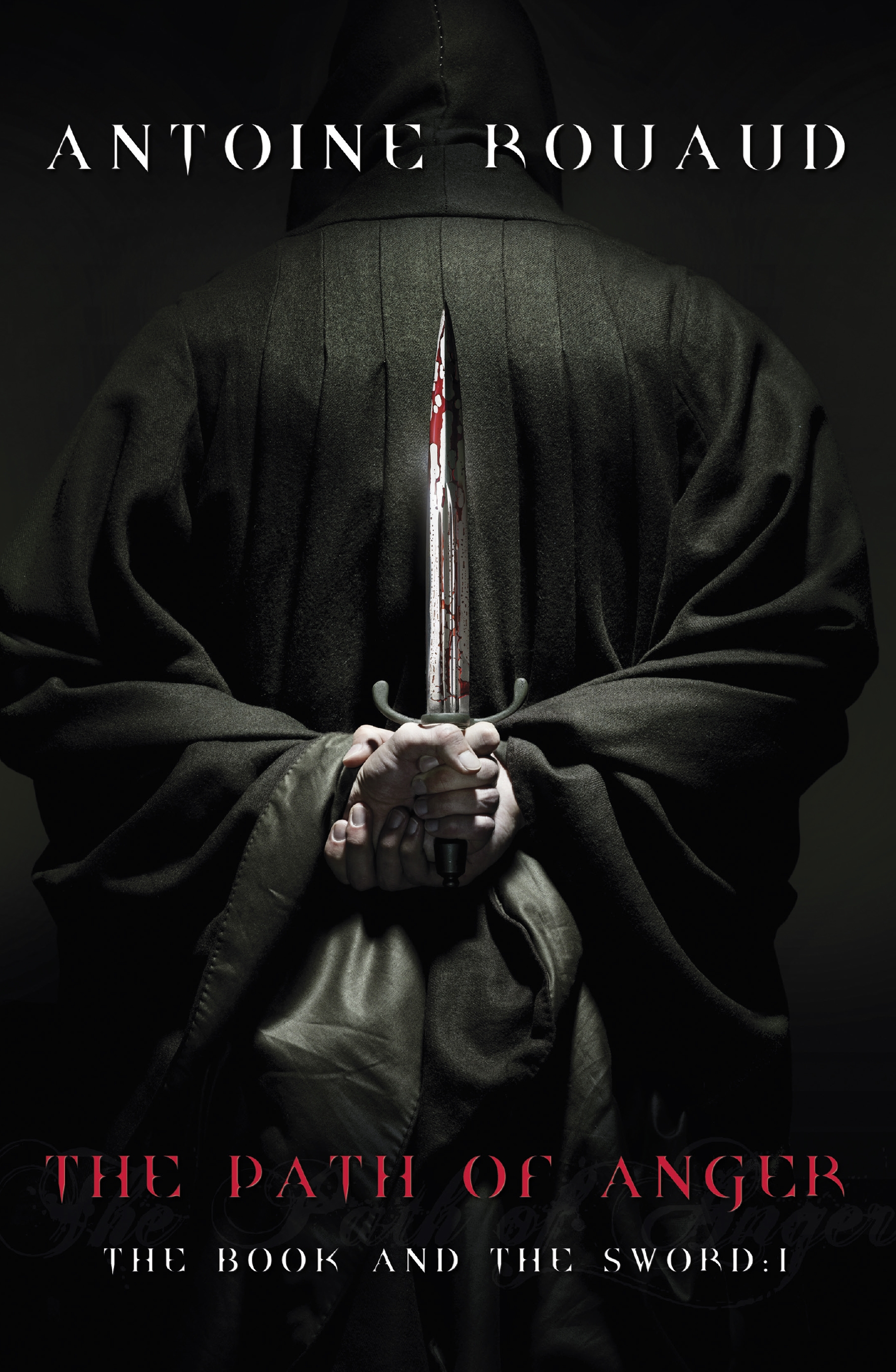
Cool, calm, collected, Antoine Rouaud steps onto the sands shrouded in a drawn hood and full length cloak, one hand curled about a dagger dripping with blood, the other clutching to The Path of Anger, published by Gollancz. In his footsteps follow both knights and assassins, deadly with both blade and magic, and who will let none stand in their way.

Last but certainly not least, especially if he has anything to say about it, is Luke Scull, heralded into the arena by chants of ‘Skull, skull skull!’ as if the baying crowd has already sensed the pull-no-punches savage grit of his debut The Grim Company published by Head of Zeus. The tyro-titan boats his very own grim company of heroes and heroines, barbarians and bastards, dead gods and diehard rebels, spoiling for a fight from the moment he sets foot on the sands.

And that, ladies and gentleman is that! Head on over to the DGLA Official site to show your support for your favourite authors. I'll be reviewing each of the nominations and inviting the authors for both an interview and guest post, for you to learn a little more about them.
 
There’s only one last thing to say…

GLADIATORS…ARE YOU READY?!?
 
Voting closes 31st May.

Monday, 7 April 2014

Book Review: 'Valour' by John Gwynne.

The axe isn't just for show...

Valour – John Gwynne.

The Good: The stuff of legends, for fans young and old, page-burning pace.

The Bad: Overcomes the ‘difficult second book’ syndrome and whilst it lives up to the debut I felt that the overarching plot was second to the characters’ journeys.

The Ugly Truth: The ‘Chosen-One’ offspring of George R R Martin and J K Rowling, raised on the bedtime stories of Tolkien and whipped into fighting shape by David Gemmell…but still 100% Gwynne.

For Those That Like: Epic battles, Coming-of-age epics, fantasy with a pinch of fairytale-dust, and world-ending prophecies.

Battle is joined in the Banished Lands.
A crusade sweeps the land. Kings are put to the sword. Traitors lurk in every shadow. Ancient weapons emerge from forgotten histories…
But the war of the Gods has only just begun.

King Nathair has declared war on Asroth the Fallen. With the allegiance of kings, queens, corsairs giants, and the angelic Ben-Elim, Nathair marches to defend his kingdom from the coming of the Black Sun, avatar of darkness. The prophecy has come to pass – ‘at Midwinter’s height, bright day shall become darkest night’ – and as the chosen ‘Bright Star’ Nathair is the last hope for the Banished Lands and those faithful to the benevolent god Elyon.
Or so it seems…
Corban and his companions are on the run. Battered and bruised, but not yet broken, the motley company head for sanctuary in a foreign kingdom. Hunted across the land, Corban cannot escape the company’s pursuers, or his encroaching destiny. Trained daily in the sword dance by the mysterious Gar, and schooled in the fabled Earth Power, Corban is coming to realise that a certain prophecy might just have a ring of truth to it.

Whilst the Banished Lands are plunged into war, dark forces in the Otherworld prepare to enter the fray. The final struggle is nearing, and the Fallen will destroy the Faithful.

John Gwynne comes out swinging in ‘Valour’, second novel in his ‘The Faithful and the Fallen’ series. Comes out swinging a big axe that is! ‘Valour’ is a saga true to form, set in a richly-realised world, and populated with a cast of heroes, heroines and hell-spawn.

‘Valour’ picks up directly from where ‘Malice’ left off, following Corban and company as they flee their home. Nathair’s pursuit is delayed by the politics of the realm and the squabbles of other kingdoms, but his attention turns to greater rewards, namely the Seven Treasures as they once war emerge from the forgotten corridors of history. Maquin should be dead – and he believes he’d be better off that way after witnessing the murder of his friend, Kastell. Driven by the need for revenge, Maquin crosses land and sea to exact his bloody judgement. Cywen has been abandoned by friend and family alike, but she cannot escape the attention of Nathair and his advisor Calidus. If she ever wants to be reunited with those she loves, she’ll have to slip past her guards, a traitorous swordmaster, a giant, a draig, and the ever watchful eye of a god’s avatar.

Returning to the Banished Lands is as if you never left. The world rushes out to meet you for the pages, the backdrop of myth and legend enriching every detail. The story is wrought with a master plan in mind, and as the plot progresses you can see the pieces moving on the board. Gwynne plays for the long haul, never once revealing his ‘full hand’, giving the reader just enough to keep them hooked. When the checkmate does come in the final chapters it’s so masterfully done that you’re not quite sure if you’re rooting for the winning side, and who exactly is meant to be the hero.

Whilst I did feel that ‘Valour’ directed the reader away from the overarching plot and instead favoured the individual characters’ journeys and development, I welcomed the cast’s evolution which added further weaves to the ever-thickening tapestry. It’s a hefty tome too, but no sentence is spared. The pace was not sacrificed in light of this, as the book goes from page-burner to page-turner. I snatched time to read between taxis, trains, planes and coffee breaks, and the book in turn snatched me from the real world so much so that I read late into the night and early in the morning.

Gwynne has gone from strength to strength in the past year, earning critical acclaim, securing further publishing contracts, and winning no less than the David Gemmell Morningstar award. In the past other authors have been backed into the corner with the ‘difficult second novel’ but Gwynne delivers hard-hitting and gutsy. For an author still cutting his teeth in the big blue ocean that is the mainstream fantasy catalogue, John Gwynne wades in with a depth of world building that’d see most newbie authors flounder.

With both ‘Malice’ and ‘Valour’ setting Gwynne’s standards high, it’s safe to say that one of fantasy’s newest authors has raised the bar for his next offering.

Thursday, 27 March 2014

Interview: John Gwynne, author of 'Malice' & 'Valour'

John Gwynne. Heroic Fantasy at its best - axes and warhounds.
To celebrate the release of 'Valour' - John Gwynne's second novel in his Faithful and the Fallen series - we invited John back to 'WwaS' for another interview. It's been a busy year for John receiving critical acclaim for 'Malice', picking up awards, and extending his publishing rights across the world as part of his plan for global domination.

So how does a fantasy writer deal with the fame and the success? A good day out at Warner Brother Studios exploring the world of Harry Potter! So without further ado, let's begin.

1.     Hi John, welcome back to ‘WWAS’ (Written With A Sword). Since we last spoke way-back-when in 2013, you’ve had a busy year of awards and further publishing contracts. What’s been your highlight of the past year?
Hi David - thanks for inviting me back. You’re right, it has been a pretty crazy year for Malice and its sequels. The year started very nicely with Orbit US buying the American rights for Malice and Valour, and soon after Fanucci bought the Italian rights. A little later in the year Tor UK bought books 3 and 4 in the Faithful and the Fallen series. In October Malice won the David Gemmell Morningstar Award for best fantasy debut of 2012. I’ve also attended some great events, such as Goldsboro Books Fantasy in the Court, as well as the David Gemmell Awards and World Fantasy Con 2013. Malice was released in the US in December 2013. And behind all of that Valour was going through the editorial process, which has been great fun, ending with me seeing a glimpse of the artwork in December (love that axe!)
So yes, a pretty full year. The highlight, though. It has to be Malice winning the Morningstar at the David Gemmell Awards. It came as such a monumental surprise, and kept me grinning for a very long time - I still am, in fact, whenever I think of it.
  
2.     Being a fan of David Gemmell yourself, what does it feel like to have won the Morningstar award?
 Utterly amazing. I’ve been a fan of David Gemmell’s since my teens, when I discovered Legend and read it in one sitting - right through the night. It was a great moment for me when I saw Malice on the shelf in Waterstones alongside Legend, so when I heard that Malice was in the longlist for the Gemmell Awards I was absolutely thrilled.
The Gemmell Awards has really been the only award that I have ever taken any interest in, partly because of Mr Gemmell’s name attached to it, and also because it is a readers vote, which appeals to me. I’ve voted on it every year, and often bought books in the shortlist.
When I heard that Malice made it through to the shortlist I was over the moon, especially considering the other titles on that list - all great books that I’ve thoroughly enjoyed.
To win the Morningstar - it was such a wonderful moment. My daughter, Harriett, is profoundly disabled and requires a high level of care, so I rarely get out these days. By a pleasant twist of fate the Gemmell Awards took place in Brighton, only a short distance from where I live. I thought it would be a nice opportunity to have a rare night out with the family, so we all went along. Not expecting to win, just looking forward to a night out together amongst some lovely company. And it was great fun - right from James Barclay’s opening rendition of a Druss speech. Winning the Morningstar came as an absolute shock. It was a wonderful moment, made all the better by my family being there with me.
 
3.     As humble a man as you are, I hear your speech at the DG award ceremony was completely off the cuff. Is this the same for your writing process, or do you go with the flow and see what happens?
 I didn’t have a speech prepared because I did not for one second think Malice would win. When my name was read out I was clapping the winner, not realising that it was me! So I did wing it - can’t actually remember what I said, it’s a bit of a happy blur. There were some thank-you’s, and a reference to my fatness!
As far as writing goes, there is a lot more order. I spent a long time researching for Malice and the Faithful and the Fallen series. George R. R. Martin is often quoted for saying writers fall into two camps -  architects or gardeners. For me I’d say my writing style falls somewhere in the middle - there are definite key events all along my story that are clearly set out, but the character journeys between those events have been subject to change, or at least to considerable meandering!
 
4.     The release of ‘Valour’ marks what some authors claim to be ‘the difficult second book’. Did you find it difficult to rise to the occasion with book number two, or was it all the more enjoyable as you were getting deeper into the story?
 To be honest I didn’t feel much of that ‘second book syndrome.’ Valour was a much smoother write for me. A lot of Malice was a learning curve, balancing character, plot, action, world-building, scene-setting, whereas in Valour most of that is in place, so it was just a case of getting on with the story. And I was getting to points that I’ve been imagining for many years. I really enjoyed writing it. Also I had a deadline for Valour, which for me really helped me get my head down - although with a little added stress.
 
5.     Between Malice and Valour, have you discovered anything new in how you write? Any lessons learnt?
 Absolutely. The whole experience has been one long learning curve - and I’m most definitely still learning. Having a great editor has helped immensely. My editor at Tor UK, Julie Crisp, has been amazing. Never heavy-handed or dictatorial, all of her editing comes in the form of questions.
To my mind it’s all about getting the balance right. Description, character, plot, action. I don’t know how other people write, but I tend to visualise a scene first, try and put on the character’s head and see things from their point of view, then try and write that.
 
6.     In your opinion is writing an honed skill or a natural talent? And, how do you gauge when a chapter/book is ‘finished’ to its final standard?
 I don’t know that I’m the right person to be asking that question! I still feel that Malice being published is due as much to luck as any other factor.
Writing (and reading) is such an objective experience, as much art as anything else. I suppose if I were to try and answer your question I’d say - both (not a cop out, honest).
Any creative undertaking usually starts with a dollop of natural talent, but to take it anywhere it has to be practised, refined, improved. As my agent John Jarrold is very fond of saying, “writer write.”
 
7.     What’s a ‘day at the office’ of writing for you?
 There is no typical day. My daughter Harriett is profoundly disabled, and my wife and I are her carers. A lot of Harriett’s practicalities fill the day - eating, changing, washing etc. Harriett also likes to be sung to, which is strange as my wife and I have possibly the worse voices in known history.
Also my wife and I run a vintage furniture and accessories business (bills have to be paid). It is something that’s fairly flexible that we can manage mostly from home. My wife’s the brains in this, so for me it mostly means lifting, carrying, fixing, sanding, painting and restoring old furniture.
And of course, lets not forget the other children. Three boys - the oldest, James has left home, although his regular drop-ins manage to leave the fridge and cupboards picked clean of all food. The other two - Edward (the Teenager) and William. For them my wife and I interchangeably fill the roles of taxi driver and referee!
Writing fits in around the above - usually at night, when it’s dark and quiet, and more so in the day when dead-lines loom!
 
8.     In 10 years time what would you like readers to remember from your books?
 Crikey, I’ve not thought of that one before. I suppose to be moved emotionally (hopefully not by hatred or loathing of my books). For me my favourite books are the ones that stir and hook me emotionally. They’re the ones that I think back on, that I sneak off to the loo to read the next chapter. That I stay up later than I should reading. If anything I’ve written has that kind of effect on someone else then I’d be really pleased.
When I was writing Malice my wife Caroline and my middle son Edward were my only readers for a while. He cried at a point in Malice and I remember feeling very happy at that - sick parent, I know. But I suppose that is the highest praise, that another person can be moved emotionally by the arrangement of words on a page. He cried whilst reading Valour, as well. A good sign in my book!
Thanks John! VALOUR is out today (27th March).

Wednesday, 5 March 2014

Guest Book Reviewer Rob Sharpe & 'Malice' by John Gwynne


To celebrate the upcoming release of John Gwynne's 'Valour' the second novel in his 'The Faithful and The Fallen' series, here on WwAS we're running a few extra features on the award-winning debut 'Malice'. And rather than start with what WE think of 'Malice', we've gone out into the world and tracked down a reader in it's natural territory. On the way we trekked through swamps of coffee-rings, edged our way along the precipice of many a pile-o'-books, and were sworn at more than a few times on the London Underground for trying to read someone's Kindle over their shoulder. Alas, we have emerged successful (though not unscathed thanks to an unfortunate incident with unexpected breaking and an accidental screen-touch on an ereader!) and found a reader! So, without further delay, please let me introduce Rob Sharpe and his interview for 'Malice'.


I picked Malice up last year on a whim, and am glad to say that this time my whim made me very happy.  So happy that it was my favourite book of 2013, in the face of some stiff competition.  2013 was a good year for my bookshelf.

 Malice, in the current UK trend of  “grimdark”, is a coming of age story -  but this isn’t any old coming of age story – the characters are all very well fleshed out, there are twists and turns, politic machinations, deaths, some very well written battle scenes, that Bernard Cornwell would tip his hat to, and GIANTS…

 John Gwynne the author has stated that he has been influenced Gemmell, Tolkein and GRRM amongst other.  Certainly he, like GRRM uses multiple POV’s, my two favourite POV’s are the sister of one of the main protagonists, and the sworn man of the other protagonist, and he isn’t afraid to get rid of major characters or POV characters.

From my point of view there are two Gemmell related themes running through Malice – “The End never justifies the means” and “Evil only exists when good men stand aside and doing nothing”.  You’ll have to read the book to understand what I mean.

I cannot praise this book enough, and have tried not to give away too many spoilers – the reason being is that I want the people reading this review to pick up the book and enjoy every page as I have.

I would like to thank John, whom I have met, for such a great novel, and to D.E.M Emrys for publishing this review.

I can’t wait until March 27th for Valour (Book 2)


Rob Sharpe when not writing Oracle IT code is a keen reader. 
Rob first started of with Tolkien, Donaldson and Eddings before moving on heroic fantasy  - especially Brirsh heroic fantasy and the late great David Gemmell. 
Rob can be found, if you can track him down, busy reading books by John Gwynne, James Barclay, Joe Abercrombie, Anthony Ryan, Richard K Morgan, GRRM, Miles Cameron and a host of others.